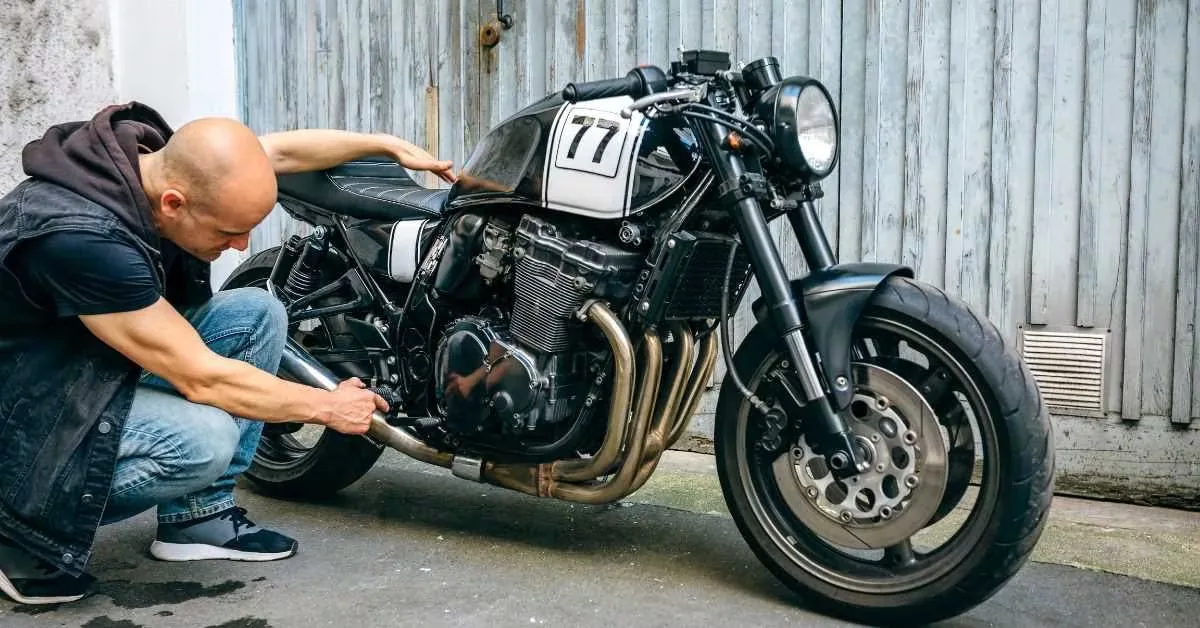
Most mechanical surprises on the road aren't really surprises. They were visible that morning, in the two minutes most riders skip because the bike started fine yesterday. A short walkaround before you ride catches the vast majority of it.
Tires first
Check pressure cold, before the bike has been ridden, and use the figure in your bike's manual rather than the maximum printed on the tire itself; they're often different numbers for different reasons. Underinflated tires change handling more than almost anything else on the bike, and they're the easiest thing to miss just by looking.
While you're down there, check tread depth and look over the surface for embedded objects or cracking along the sidewall, especially if the bike has sat for a while between rides.
Controls and lights
Riding instructors around the world teach a version of the same mnemonic for this part: tires, controls, lights, oil, chassis, stands, often shortened to T-CLOCS, a framework popularized by the Motorcycle Safety Foundation. The point isn't the acronym, it's that nothing gets skipped because you're tired or in a hurry.
In practice that means: brake lever and pedal feel firm and return on their own, the clutch engages smoothly, the throttle snaps back without sticking, and the horn, headlight, brake light, and turn signals all work. It takes under a minute and it's the difference between a problem you find in your driveway and one you find at speed.
Fluids and chassis
A quick look at oil level and for any fresh leaks under the bike, chain tension and lubrication if your bike is chain driven, and a scan for anything that looks loose that shouldn't be. Adjust your mirrors before you move, not after you're already in traffic.
None of this replaces a proper service interval. It's the two minutes that catch what happened since your last one.
Track service intervals and set reminders for each bike in your Garage, so the two-minute check is backed up by a real maintenance history.